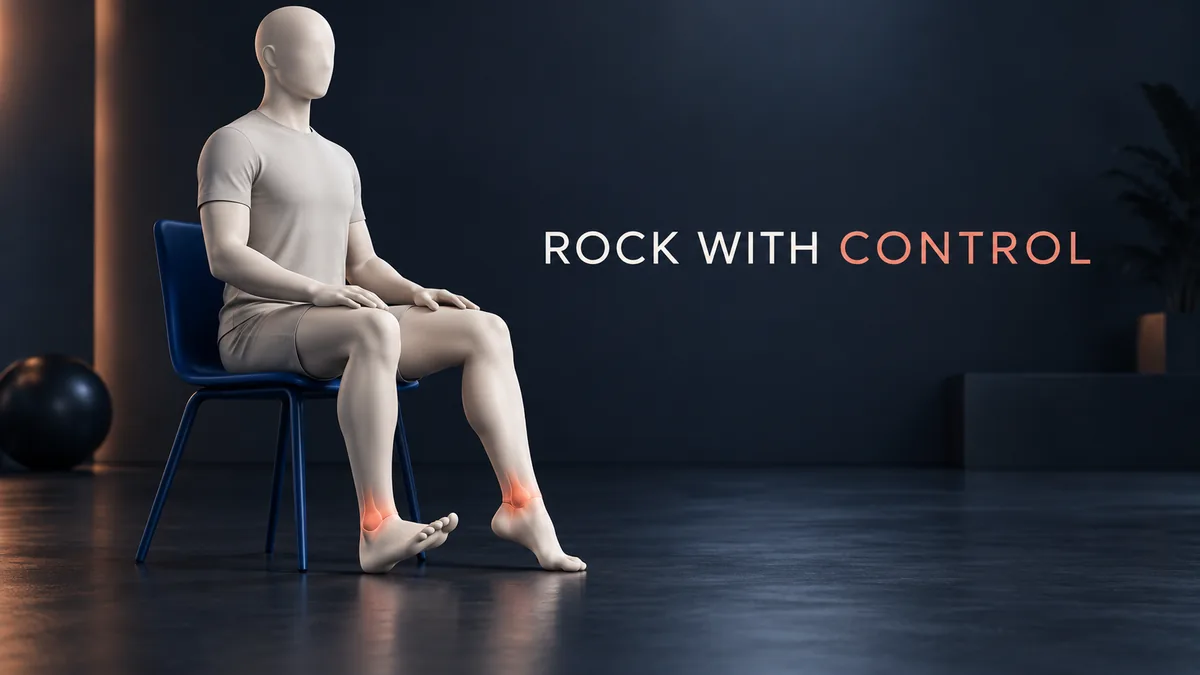
This drill separates two ankle actions. First lift the forefoot while the heels stay down. Then lift the heels while the toes stay down. The goal is a clear, comfortable path, not height or speed.
Choose a stable chair
Sit on a chair that does not roll or slide. Place both feet on the floor with the knees comfortable and the trunk quiet. Keep enough space around the feet.
Lift the toes
Keep the heels in contact with the floor and lift the forefoot. Move only as far as you can without gripping, cramping or rocking backward. Lower with control. The Kingston NHS programme describes the same heel down setup.
Lift the heels
Return both feet to the floor. Keep the toes and balls of the feet down while the heels rise. Let the ankles do the work while the knees remain roughly over the feet. Lower quietly.
Alternate slowly
Practise each action separately before joining them. The Oxford hospital booklet alternates toe lifts and heel lifts in this order. Its example count is not a universal dose. Choose a small amount you can repeat with the same control.
Check what stays quiet
Watch whether the knees swing, the feet roll to an edge, or the trunk rocks. Reduce the range if another body part takes over. Compare the action with seated ankle circles, which trace a circle, and a standing calf stretch, which holds a different position.
Record one observation
Notice whether toe lifting or heel lifting feels clearer today. This is an observation, not a diagnosis. You can record the practice in Fitonomy Mobility, but the app does not diagnose ankle limits. Stop for pain, dizziness, numbness, tingling, instability or cramping that does not settle. Recent injury, surgery or unexplained swelling needs individual guidance.
If you want to move from this seated ankle drill into a supported walk preparation, see the optional mobility routine before a walk.
To practise the forefoot lift while standing with support, use the heels down standing toe lift guide.
For a smaller motion at the toe joints, the seated toe curl guide keeps the heel down rather than lifting the whole foot.
If standing beside a fixed support feels secure, try a bent knee heel raise to lift both heels with the forefeet planted.