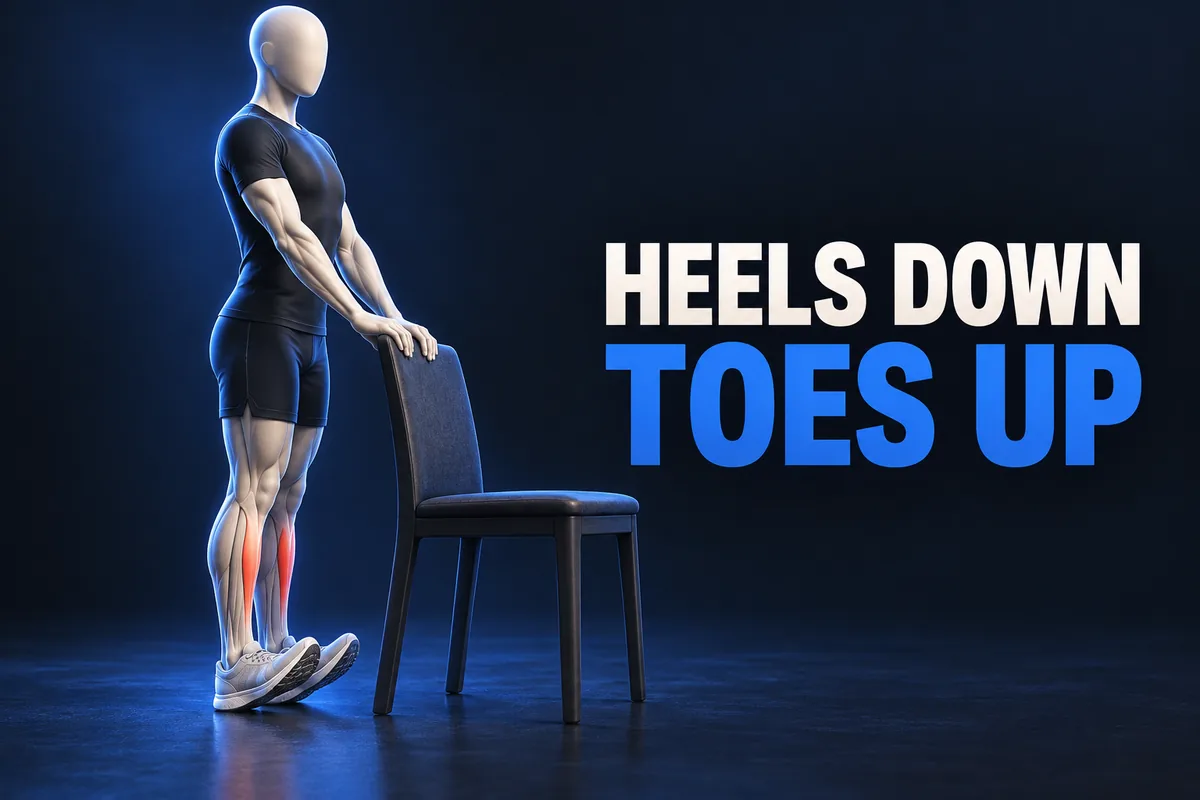
Know which part of the foot moves
This drill lifts the forefoot and toes while both heels stay on the floor. It is an ankle movement, not a rise onto the balls of the feet. Some guides use the words toe raise for the opposite heel lifting action, so check the foot position rather than the name. The NHS standing exercise guide and Vanderbilt movement sheet both describe heels down for this version.
Set up reliable support
Stand on a clear level floor behind a solid chair that will not slide or roll, or face a fixed counter. Rest both hands on the support and place the feet around hip width apart. Keep the knees comfortable and the gaze forward. If you cannot stand securely even with support, choose the seated heel and toe movement instead.
Lift the forefeet without rocking
Keep both heels in contact with the floor. Lift the balls of the feet and toes a little, then lower them quietly. Do not lean your whole body backward to make the toes rise higher. The NHS guide describes a controlled pace and warns against rocking. Let the support help you stay steady rather than treating the drill as a balance test.
Make the motion repeatable
Try a few small repetitions and notice whether both forefeet move without the knees or trunk taking over. Height and speed are not scores. Pause and reset if the feet roll outward, the heels slide, or the body tips backward. A smaller clean lift is more useful than a larger movement made by swaying.
Use a seated route if standing feels uncertain
The seated heel and toe guide teaches the same forefoot lift from a chair and also explains the opposite heel lift. Seated ankle circles explore a different ankle path without a standing balance demand. The beginner mobility guide helps choose a comfortable position. Switching to a seated version is a sensible change in setup, not a failure.
Record control and know when to stop
Note the support used, footwear and whether the heels remained planted, then compare the same setup another day. This observation is not a diagnosis or a promise of better walking. Stop for pain, dizziness, tingling, new swelling or instability. For recent injury, surgery or a clinician directed restriction, seek individual advice. Fitonomy Mobility is a separate movement app; article languages do not state its app language availability.
Keeping the heels down while traveling is different from lifting the toes in place. Our supported heel step guide explains the short path and grounded reset.