Check the path and your starting position
Choose a clear level floor beside a fixed counter or secure rail that stays within reach. Wear secure footwear and keep your eyes open. This is optional movement control practice, not a balance test or treatment. A recent fall, injury, surgery or personal movement restriction needs individual advice before trying it.
Rise only while steady
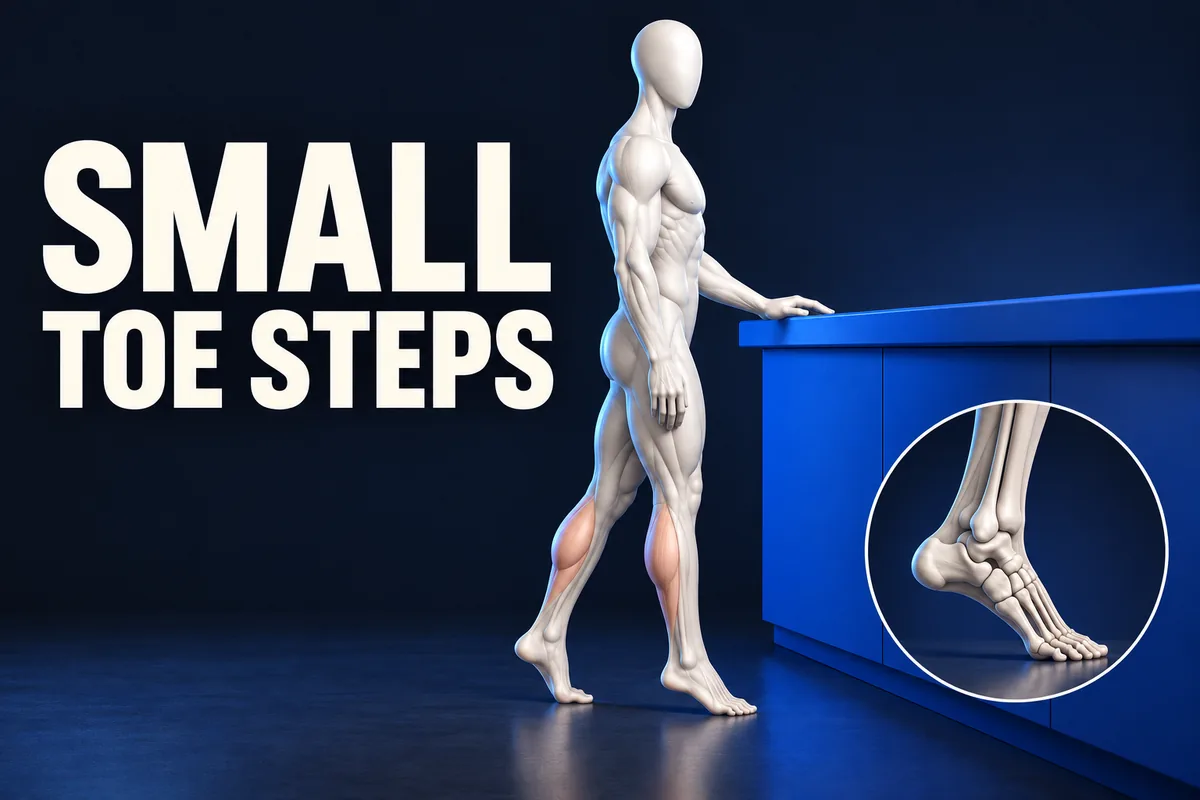
Stand beside the support with feet comfortably apart and a hand holding it. Look ahead and slowly lift your heels a little, keeping the forefoot pads and toes in contact. The South Tees NHS guide describes supported toe walking. If you cannot remain steady, lower the heels and choose another task.
Take a small forward step
Keep the support and take a short controlled step on the front of your foot, with the heel raised. Bring the other foot forward only while steady. The Torbay NHS sheet describes small forward steps beside support. Stop before the clear path or reachable counter ends. No required step count applies here.
Put heels down before turning
Pause and lower both heels with control. If you choose to change direction, turn in small ordinary steps toward the support while keeping hand contact. Do not twist while staying high on your toes. Stop for pain, dizziness or unsteadiness. Keep the support you need rather than removing it for a harder version.
Distinguish nearby movements
The tandem walk uses heel ahead of toe placement; the side step travels sideways. Standing toe lifts keep the heels grounded. Record support and manageable steps, not a diagnosis or promised improvement. The beginner guide helps choose another movement. Fitonomy Mobility offers movement practice; article translations do not imply every app interface language.
For the opposite foot position, review small steps on the heels with the forefeet raised and a hand on stable support. Lower both feet before turning.