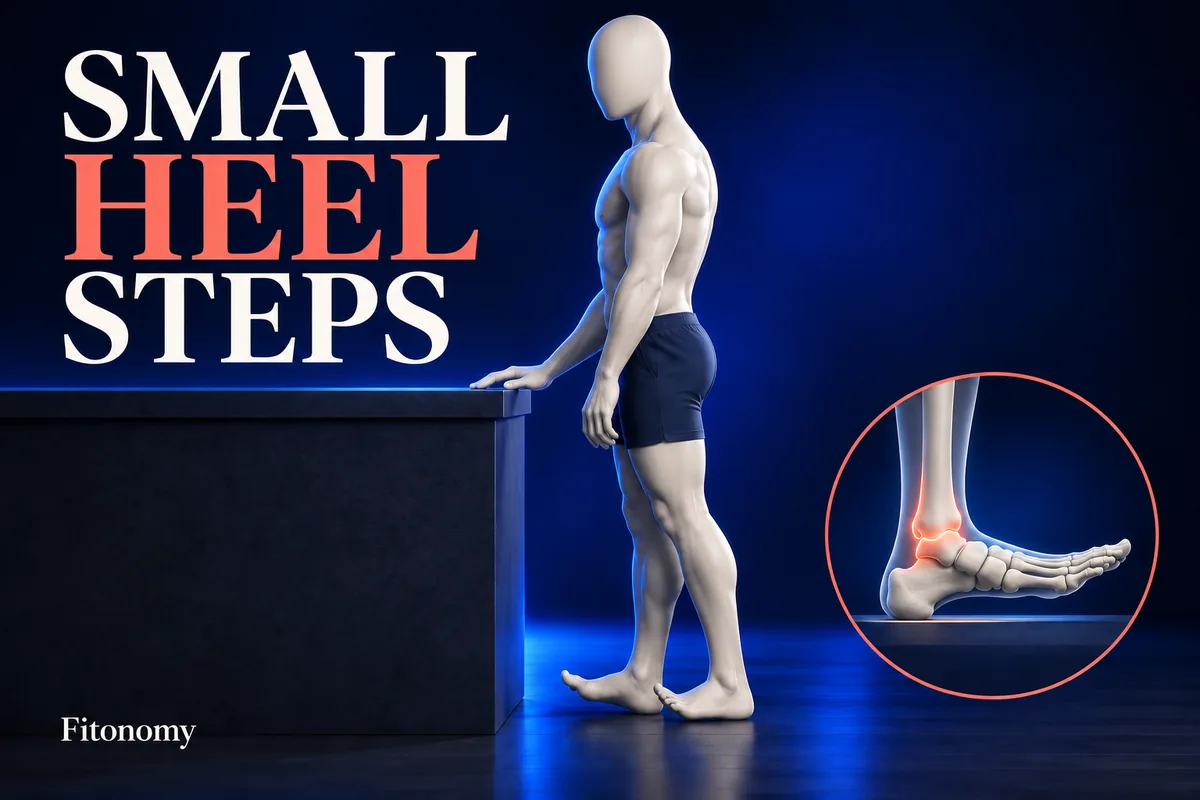
Check suitability and secure support
Heel walking is a different task from ordinary walking. If you are unsure whether it suits you, especially with falls, injury, recent surgery or movement restrictions, ask a qualified professional first. The Torbay NHS exercise sheet describes secure support. Use a fixed counter, a clear level path and secure footwear. Keep your eyes open and your hand on support.
Raise the forefeet gently
Stand beside the counter with your body upright and knees softly unlocked. Gently lift the toes and front of both feet while the heels remain on the floor. Avoid leaning forward or pushing the hips backward. The Royal Osteoporosis Society sheet hosted by NHS illustrates heel walking. Use a comfortable lift, not the highest possible angle.
Take short heel contact steps
If the starting position feels steady, take a few small steps along the counter, landing on the heels with the forefeet raised. Keep the support within easy reach and maintain hand contact. There is no required distance or count for everyone. Stop if you feel pain, dizziness or instability. Do not continue simply to finish a target.
Lower the feet before changing direction
End the short path by gently lowering the forefeet so both soles rest on the floor. Pause in a stable position before turning or starting again. Do not turn while balancing on the heels. If the setup feels difficult, choose the stationary task or seek individual guidance rather than removing support.
Compare nearby movement tasks
Standing toe lifts stay in one place with heels down. Supported toe walking travels with heels raised instead. Tandem walking uses narrow foot placement, not this raised forefoot position. Review the beginner mobility guide and Fitonomy Mobility for routine planning. This movement is not a diagnosis, treatment or a promise of fall prevention.