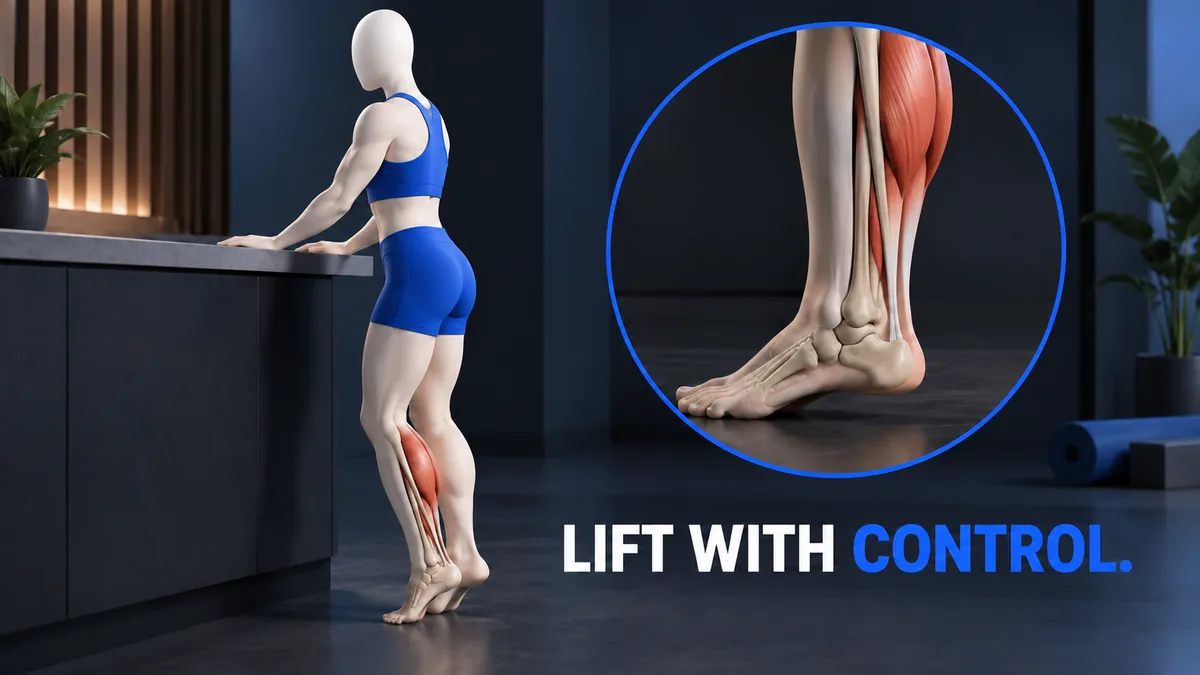
Know which part moves
This is a heel lift, not a toe lift or a held calf stretch. Both balls of the feet remain on the floor while the heels rise and return. Keep a small bend in both knees. The Leicestershire NHS instruction shows this bent knee version; its rehabilitation timing is not a general target. The seated heel and toe guide teaches a less loaded version.
Set up reliable support
Stand on a clear, level floor in shoes or bare feet that do not slip. Face a fixed counter or another support that cannot roll or tip. Place both feet about hip width apart and share weight across them. Rest your hands where you can steady yourself without leaning far forward. If standing is uncertain, choose the seated version.
Lift and lower both heels
Soften both knees slightly and keep that bend while pressing through the balls of both feet. Lift the heels only a comfortable distance, then lower them slowly until the whole foot touches the floor again. Keep the toes relaxed and the trunk quiet. The NHS Fife example also depicts a slow heel lift with bent knees.
Keep the movement small
Try a few controlled lifts rather than chasing height, speed or a fixed count. If the knees straighten, the feet roll toward an edge or you need to sway, reduce the lift or put more weight through the hands. Stop for pain, dizziness, new swelling or instability. Recent injury, surgery or a personal movement restriction calls for individual guidance.
Compare and record the setup
The bent knee wall calf stretch keeps the rear heel down in a held stance, while standing toe lifts keep both heels down. Those are different foot paths. Note the support, footwear and whether both heels lowered quietly. Fitonomy Mobility can support movement practice; the article languages do not describe app interface availability.