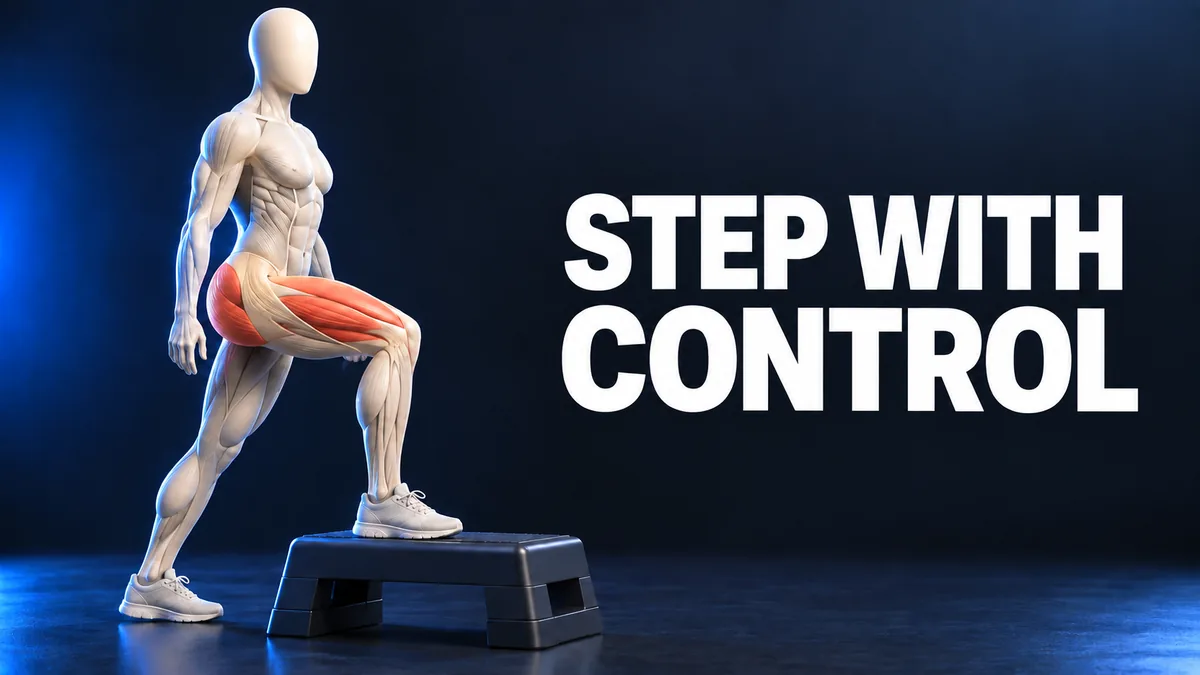
A step up can be a simple way to practise a controlled lower body movement. Begin with a low, secure platform and your body weight. The aim here is a repeatable movement, not a height or repetition target.
Choose a low stable step
Use a low step that cannot slide or tip. A stair with a solid rail may offer support. Avoid a loose stool or a platform so high that you must jump or twist to climb it. Keep clear space behind you for the return. The Mayo Clinic demonstration says form matters more than step height.
Place the whole leading foot
Stand close enough to set your entire leading foot on the step. Do not leave the heel hanging over the edge. Look briefly at the surface to check your placement, then lift your gaze. Keep the knee roughly in line with the foot. The ACE exercise instructions describe firm foot placement and controlled alignment.
Rise without rushing
Press mainly through the foot on the step and bring your body upward. Let the other foot join it if that gives you a steady finish. Keep your trunk comfortably upright and use a secure rail lightly if balance calls for it. Start without dumbbells; added weight is optional later, not a test of whether the movement counts.
Step down under control
Step backward with the trailing foot toward the floor, then bring the leading foot down. Move slowly enough that neither foot lands with a thud. Alternate the leading leg when you are ready. If you must push hard from the floor, wobble or lean far forward, choose a lower step or stop.
Compare another beginner movement
A sit to stand uses a chair and can be a useful alternative when a secure step is unavailable. Standing calf raises focus on a different lower leg pattern. The first gym guide helps you place a familiar movement in a wider session. Fitonomy also describes its Exercise Library for exploring exercise instructions.
Know when to stop
Stop if the step shifts, balance feels unreliable, or you notice pain, dizziness or loss of control. A recent injury or a condition that affects balance or exercise deserves individual professional advice before trying a new movement. You do not need a higher step or heavier load to make a first practice useful.
A squat with one weight follows a different path from a step up. See how to build a controlled goblet squat.
If a platform is not suitable, the supported stationary split squat keeps both feet on the floor and uses a firm hand support.
When a platform is unavailable but a stable chair is near, the supported reverse lunge guide offers a different level floor leg movement.