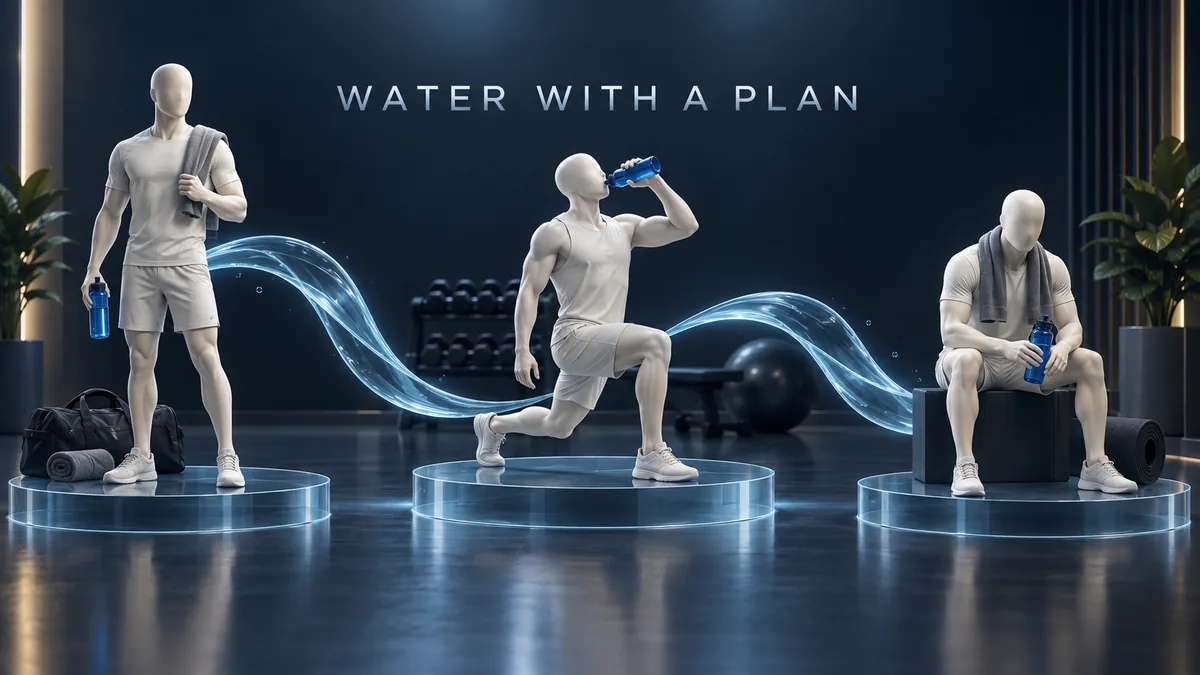
Hydration around a workout is a sequence, not a contest to drink the most. Arrive comfortable, keep water available, and replace what the session actually changed. Your needs vary with the weather, effort, duration, clothing, body size and individual sweat rate.
Start comfortably hydrated
Drink normally through the day and have water before training instead of trying to catch up at the last minute. The government health guidance recommends water before exercise and describes water as the ordinary choice for replacing fluid. A dry mouth or unusual thirst can be useful clues, but one signal should not become a diagnosis.
Use water as the ordinary default
For a typical gym session, water is a sensible place to begin. Keep a bottle within reach and take comfortable sips when the session, room or your thirst calls for them. Do not force a fixed amount because a chart uses one number for everyone.
Let the session change the plan
Longer, hotter, more humid or unusually sweaty training deserves more attention than a short easy session in a cool room. The ACSM position stand frames the goal as starting hydrated and avoiding excessive dehydration or electrolyte disturbance. It also supports estimating personal sweat loss rather than assuming identical needs.
Know when sports drinks are situational
The government guidance says sports drinks may be useful for some moderate or vigorous activity lasting more than about an hour. That does not mean every workout needs sugar or electrolytes. Match the drink to the session, environment and any advice specific to you.
Replace losses without forcing fluid
After training, return to ordinary drinking and food. If you need a more precise plan for long or hot sessions, compare body weight under similar conditions and seek qualified advice. Stop and cool down if you develop dizziness, confusion, faintness, vomiting or other signs of heat illness. For broader food timing, read our nutrient timing guide.
Keep it connected to the workout
Prepare water when you preview your Fitonomy plan. Fitonomy does not measure hydration, so use the plan for session context and your own observations for drinking decisions. People with fluid restrictions, kidney, heart or endocrine conditions, or medicines that affect fluid balance need individual guidance.
Decide whether a snack is useful, then choose a small familiar food that fits the time before training and your own comfort. Choose a Pre Workout Snack From Ordinary Foods