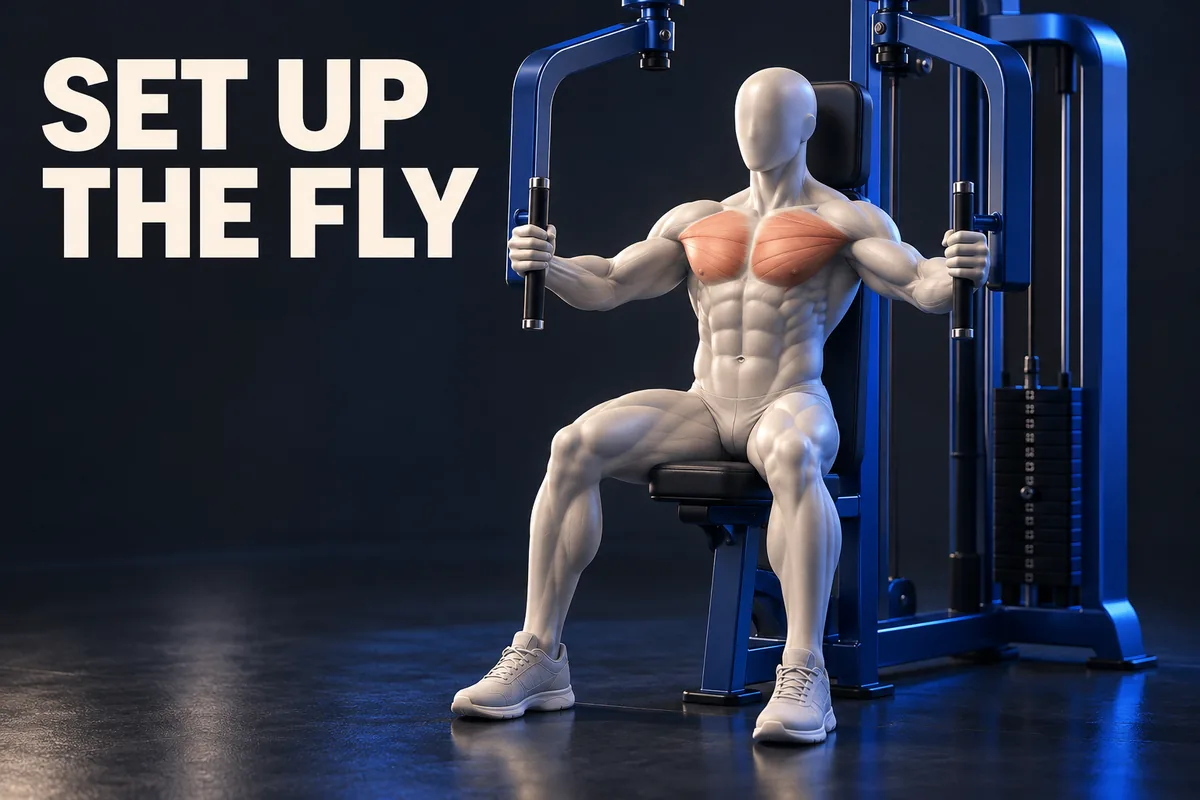
Identify the fly setting
A pectoral fly brings the arms toward each other. It differs from a chest press, which pushes handles forward while the elbows straighten. On the Life Fitness Optima example, the fly uses your back against the pad. A reverse fly uses a different position. Ask staff to demonstrate your model and its controls before using it.
Fit the seat first
Start with manageable resistance. Optima instructions position the hands slightly below shoulder height. Keep the back supported and feet secure on the intended surface. Do not copy a seat number from another machine. If the available settings cannot fit comfortably, ask a qualified trainer for another option.
Check the starting arms
The Intenza EL14 manual sets the fly start just forward of the body's midline and keeps the shoulders from rising. Follow your own machine's placard for its arm adjustments. Do not force the handles behind you. Adjust only with the stack resting and the selector pin fully engaged. There is no universal starting notch or load.
Close and return with control
Keep a soft elbow bend as the arms move together. Maintain contact with the back pad and return slowly through a comfortable path. Do not jerk the handles or drop the stack. Reduce resistance if control is lost. Stop for pain, faintness or dizziness; injury, surgery or personal restrictions require individual advice.
Record a repeatable setup
Note the model, seat and arm settings, displayed resistance and controlled repetitions. Different machines need separate records. The equipment comparison explains equipment choices; an incline dumbbell press is a separate pressing task. Use the first gym guide for broader planning and explore Fitonomy. An app cannot assess your technique. No load or repetition target is prescribed here.
The chest fly closes the arms. For the separate rear opening task, review reverse fly machine setup and follow that model's placard.