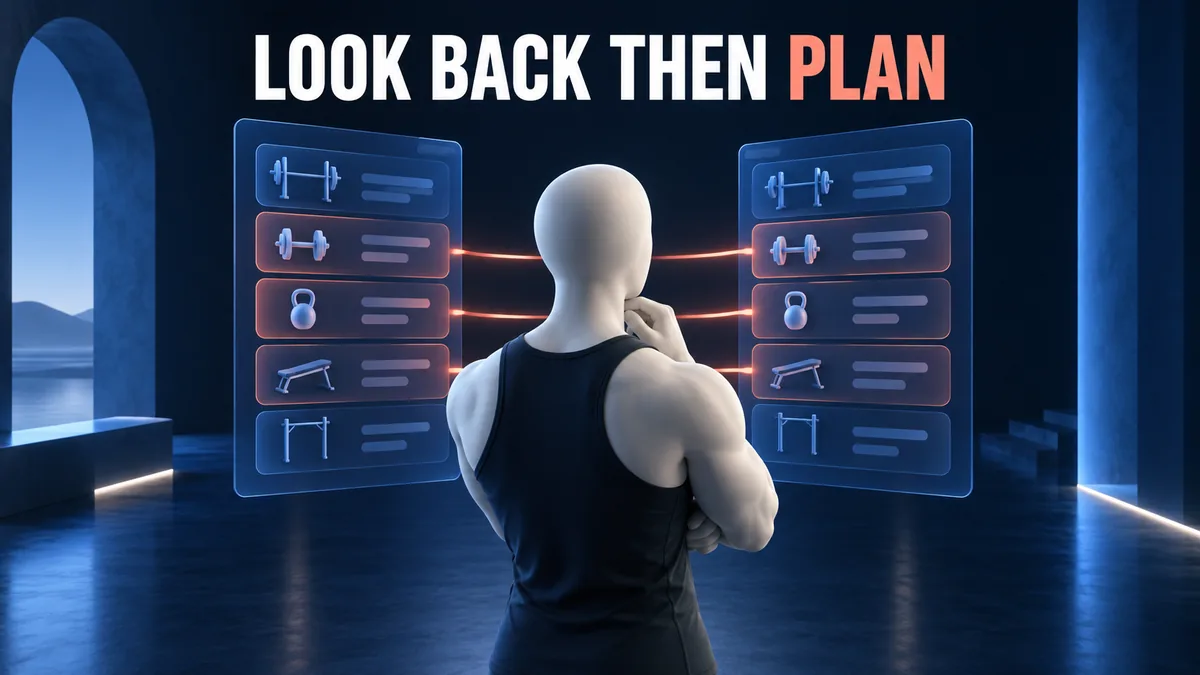
Workout history is a record, not a verdict. Use it to remember what happened and prepare one question for the next planned session.
Choose a comparable session
Start with the same exercise or a similar planned session. Comparing unrelated activities can make normal differences look meaningful. The current Fitonomy workout logger says full workout history is saved for later review.
Read several fields together
Look at sets, repetitions, weight, and effort together. One field rarely explains the whole session. The workout tracking guide explains why a simple complete record is more useful than one isolated number.
Look for a repeated pattern
One difficult or easy day can reflect sleep, unfamiliar equipment, schedule, or another temporary factor. Technology supported self monitoring studies often combine several components, according to a research review, so a saved record alone does not guarantee progress.
Carry one question forward
Choose one neutral question such as whether the same planned work feels similar next time. Keep the weekly plan as the starting point. Use the progression guide before changing a load.
Know the limit of the history
A log cannot diagnose fatigue, readiness, injury, or illness. Do not override symptoms, professional restrictions, or a prescribed plan because of a pattern on screen. Stop for concerning symptoms and seek appropriate help.