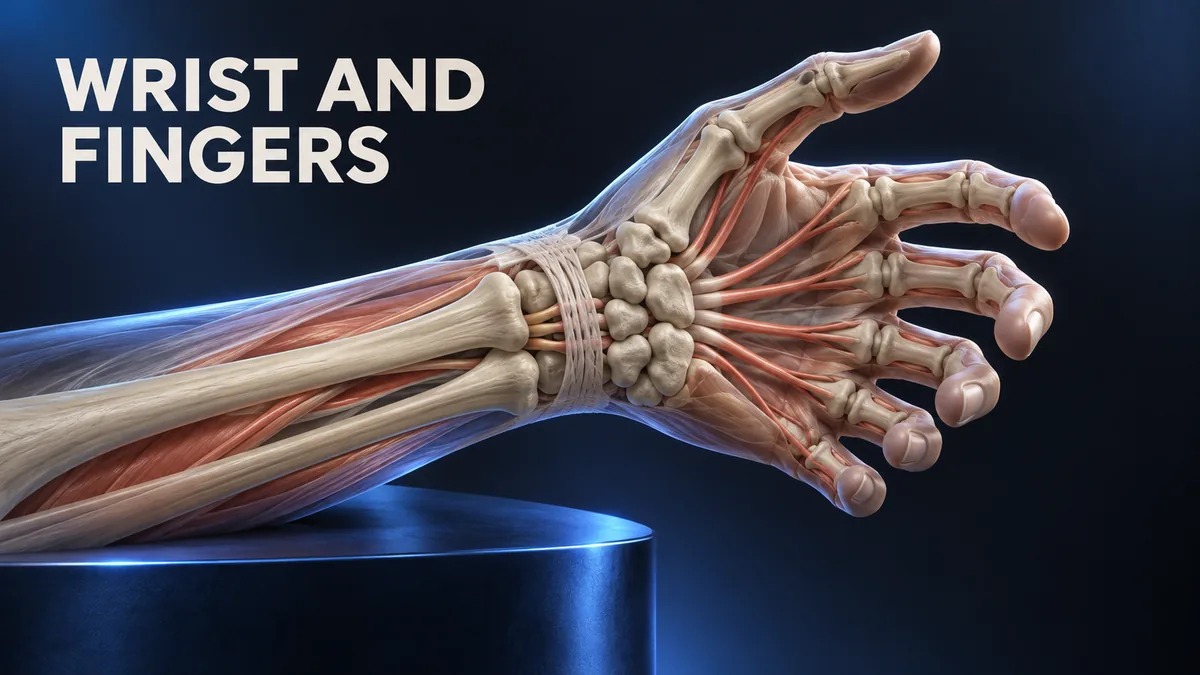
Notice the relaxed finger response
Relaxed fingers can change position as the wrist bends. The Cambridge hand therapy leaflet describes fingers straightening as the wrist bends forward and curling as it extends backward. This is a description of linked movement, not a demand to make a full fist. The leaflet is for people with wrist injuries; its exercise schedule is not a universal routine.
Understand the tendon link
Tendons connect muscles to bones. Some finger tendons pass across the wrist as well as finger joints, so wrist position affects the relaxed fingers. The anatomical review by Revol and Servant calls this a tenodesis effect. The same term also appears in surgery, which is a different subject. This article does not recommend a procedure or treatment.
Separate it from deliberate finger shapes
In finger tendon glides, you deliberately make different finger shapes while keeping the wrist quiet. Here the question concerns the fingers responding to wrist position. The seated wrist guide already covers straight wrist bends. A wrist diagonal describes a different path, not a test of this effect.
Keep any observation comfortable
You do not need a new exercise to understand the explanation. If you notice it during familiar, unrestricted wrist movement, keep the forearm supported and fingers relaxed. Do not pull the hand, force the fingers straight or add a weight. Stop for pain, tingling, numbness or swelling. After injury, surgery, splint use or prescribed restrictions, follow your clinician's advice before moving.
Record context rather than a diagnosis
A note such as fingers moved while relaxed is enough. Do not judge strength, tendon health or progress from this observation, or interpret a difference between sides yourself. Use the beginner mobility guide to choose familiar practice. Explore Fitonomy Mobility for movement practice; article translations do not imply matching app interface languages. No repetition target or normal angle is prescribed here.