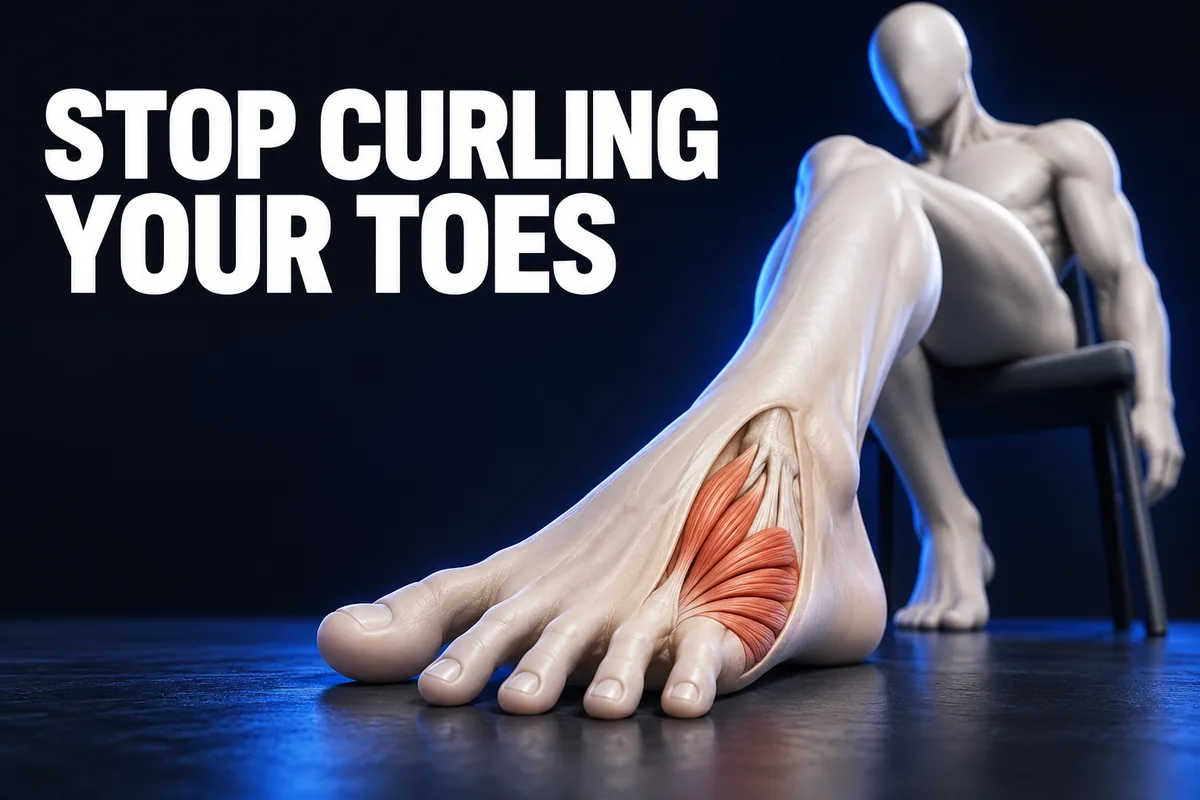
Seated toe spreading is a small active movement that asks the toes to widen and relax while the foot stays supported. Treat it as coordination practice, not a test of whether your feet are normal.
Set up where you can see the foot
Sit on a stable chair with the foot flat and the knee comfortable. Work barefoot or in a sock that does not squeeze the toes. Keep the heel and the ball of the foot resting on the floor.
Spread without forcing
Relax the toes first. Try to create a little space between them while keeping them long rather than clawing into the floor. Hold only briefly, release fully and let the toes soften before the next attempt.
Reduce unwanted movement
Keep the ankle quiet and avoid rolling the whole foot outward. If the toes barely move, use less effort. You can watch the foot or lightly touch the side of a toe for feedback, but do not pull the toes apart.
Understand the evidence
Small laboratory studies found that toe spreading activates several muscles inside the foot. Those studies measured muscle activity in small groups. They do not prove that this single exercise changes pain, foot shape, walking or long term mobility.
Build control gradually
Try a few calm repetitions on each foot and stop before the toes cramp or the movement becomes a hard curl. Skill can differ between toes and between feet. A smaller clear movement is more useful than a larger forced one.
Know when to stop
Stop for sharp or increasing pain, new numbness, skin damage, unusual color change or swelling. If you have diabetes, reduced foot sensation, a recent injury or a clinician directed plan, ask your health professional how this movement fits your care.
Continue with seated ankle circles, standing calf stretch and beginner mobility guide.
Research reviewed from PubMed magnetic resonance study, PubMed muscle activity study and Aneurin Bevan University Health Board.
To practise bending the toes rather than spreading them, use the seated toe curl and release while the heel stays settled.
If your toes stay quiet, the seated arch lift guide explores a different small foot movement while the heel and toe pads remain grounded.