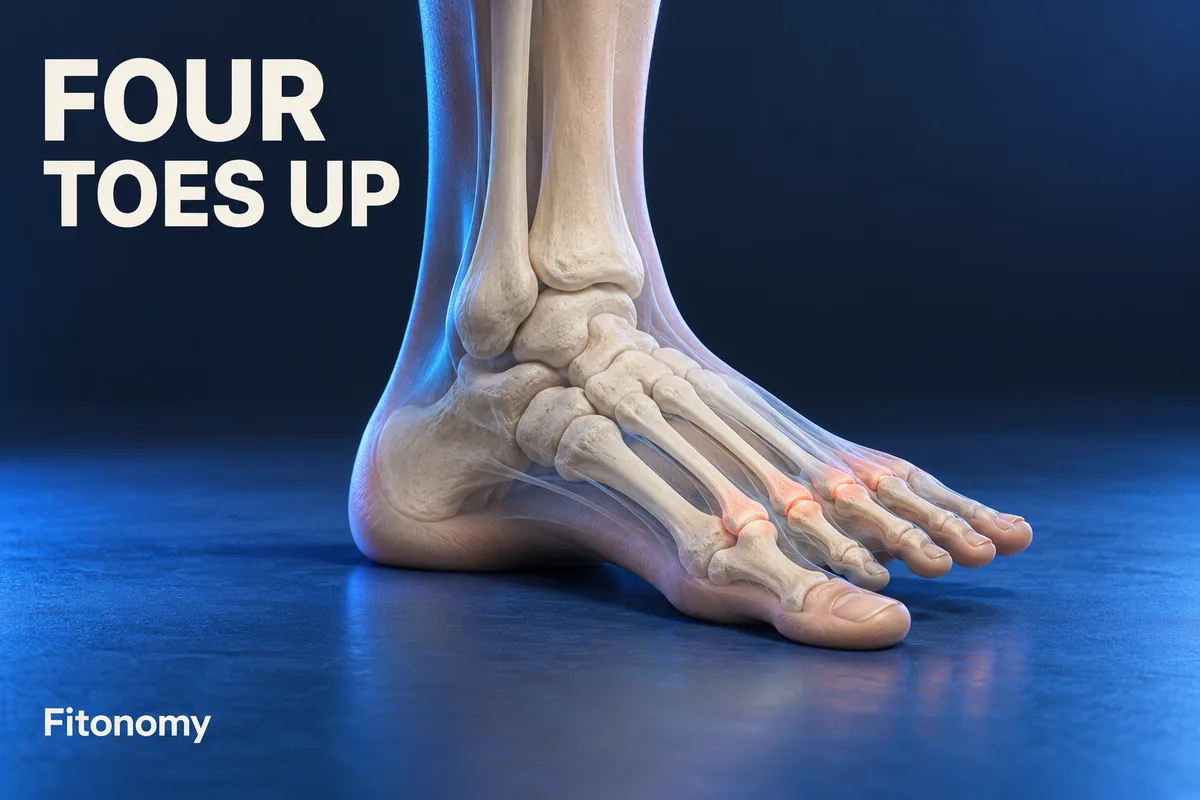
Settle the supported foot
Sit on a stable chair with both feet on a level floor. Place one foot where you can see it, barefoot or in a sock that does not squeeze the toes. Let the heel and ball of the foot settle. This is an unloaded movement task, not a balance test or a treatment plan.
Lift the four smaller toes
Keep the big toe resting and try raising the other four toes a little. Lower them slowly, then relax. The NHS Toe Yoga instructions describe this direction on a clinical bunion page. We use the direction, not its treatment claims or prescribed schedule. Do not pull the toes with your hands.
Keep the ankle quiet
Watch whether the whole forefoot rises, the heel rolls or the knee shifts. Settle those parts and use less effort. Let the big toe rest without pressing hard. If you cannot separate the motion comfortably, stop the attempt; this does not diagnose a foot problem or demand more range.
Distinguish nearby movements
The big toe lift reverses which toes lift and which rest. Toe spreading widens the digits, while toe curling bends them downward. Here four smaller toes rise and return with the big toe down. Choose a task with the beginner mobility guide rather than making every drill compulsory.
Respect limits and record control
Stop for pain, numbness, cramping, swelling or unusual colour. Injury, surgery, movement restrictions, diabetes or reduced sensation need individual advice. The NHS symptoms guide explains when to seek help; new loss of sensation or severe injury needs prompt advice. Record side, support and one control observation without a required count or promised walking benefit. Explore Fitonomy Mobility separately; article languages do not imply app language availability.