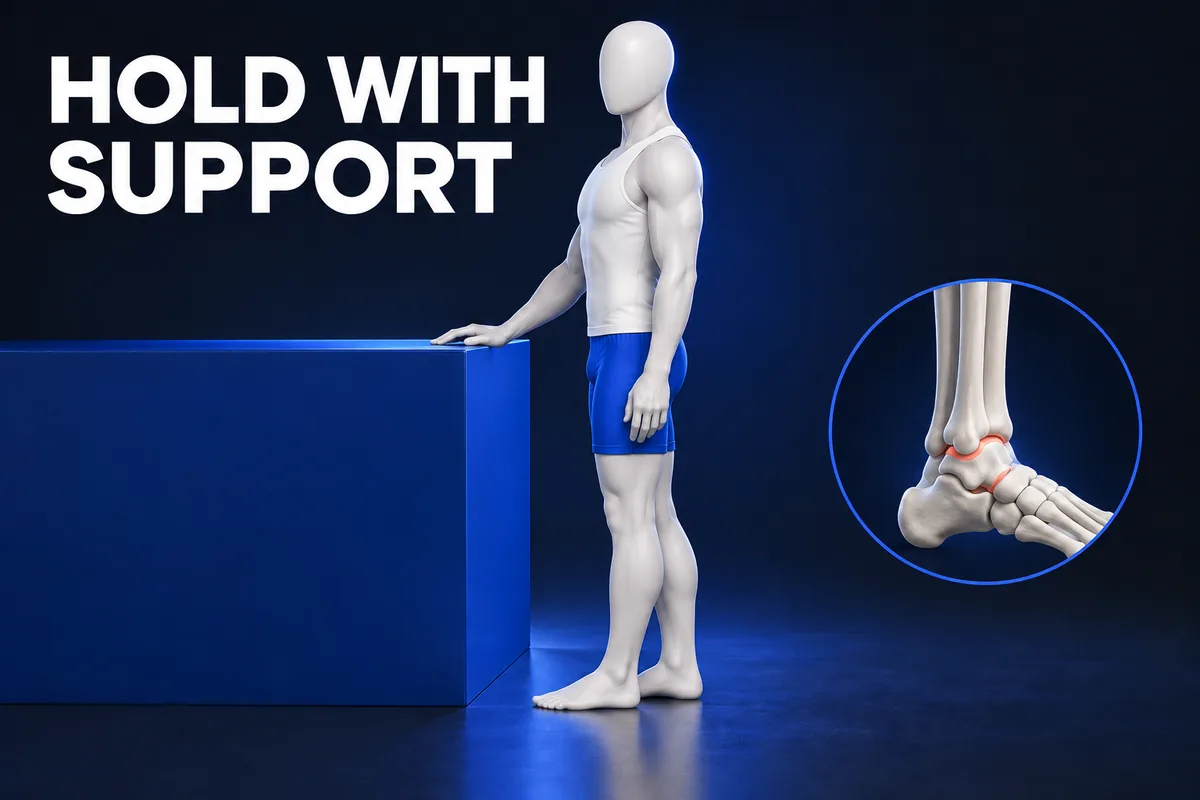
Prepare reliable support
Stand beside a fixed counter or secure rail on a clear level floor. Wear footwear that feels secure and keep your eyes open. Hold the support with the nearer hand. The Calderdale NHS exercise sheet describes an upright stance and forward gaze. This is optional movement control practice, not a balance test or treatment.
Place one foot in front
Begin with both feet comfortably apart. Keeping hand contact, move one foot directly ahead of the other so its heel gently meets the rear toes. Both feet remain flat. The Royal Devon NHS guide describes this tandem placement. If that narrow line feels uncertain, leave more space between the feet or return to the supported weight shift.
Stay briefly without travelling
Remain upright in the comfortable position for a brief moment, breathing normally. Keep the hand available rather than removing support to chase a harder version. You are staying in place: the tandem walk guide moves forward through successive steps. No required hold time or repetition count applies here.
Reset and change the front foot
Step back to a comfortable wider stance while keeping support. Pause before placing the other foot in front if the first attempt felt steady. Stop for pain, dizziness or loss of control. A recent fall, injury, surgery or individual movement restriction needs personal advice before trying a general routine. Do not add closed eyes or an unstable surface.
Record the setup rather than a score
Note the front foot, spacing, support and how the return felt. Compare attempts with the same setup without interpreting a longer hold as a diagnosis or guaranteed improvement. The supported one leg stand has a different contact pattern. Explore routines with Fitonomy Mobility; article languages do not imply the app supports every language.