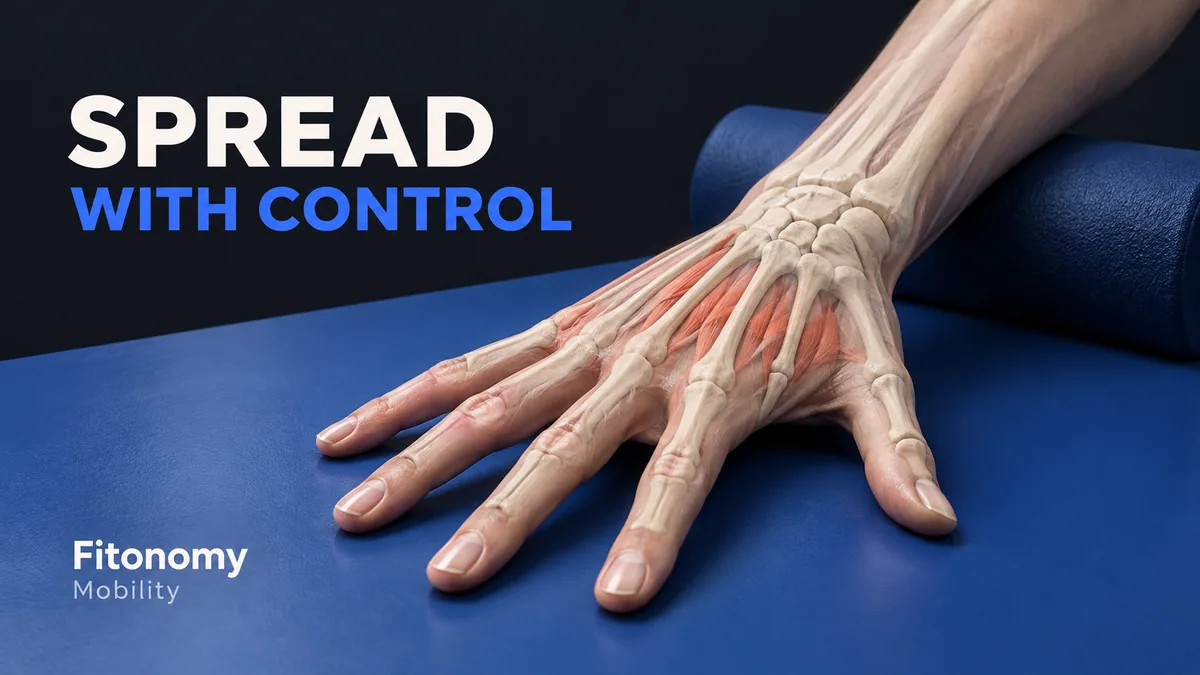
Support the palm
Sit beside a stable table and rest the forearm and hand palm down. Let the wrist sit comfortably in line with the forearm and the fingers rest naturally. The York hand exercise guide shows this alignment. Do not push a stiff hand flat or lean your body weight through it.
Move the fingers apart
Use your own finger movement to create a little space between the fingers along the surface. Keep them comfortably long rather than curling into a fist. The Bexley active finger guide describes spreading from a palm down position. Choose a small comfortable motion; do not pull the digits apart with the other hand or add a band.
Bring them together gently
Return toward the starting position without squeezing hard or snapping the fingers shut. Let the hand relax before deciding whether to try again. There is no target gap or universal count to achieve. One finger may travel differently from another. The task is active movement, not a maximum flexibility test.
Watch what stays still
Notice whether the palm rolls, the wrist shifts sideways or the entire arm slides. Reduce the motion and reset the support if those actions replace finger movement. Do not press the resting fingers firmly into the table. If the setup feels awkward, pause rather than forcing a flatter palm or a larger spread.
Respect personal restrictions
Stop for pain, locking, new swelling, numbness or loss of control. After injury, surgery or a splint, follow your clinician or hand therapist’s instructions before trying a new movement. Both source guides are clinical examples; their schedules and treatment aims are not a general prescription. This article does not claim to treat a hand condition.
Keep hand tasks distinct
Individual finger lifts move a digit away from the table. Tendon glides explore hand shapes, while thumb opposition brings the thumb toward fingertips. Choose the permitted task that matches your purpose. If recording a practice, note support and comfort rather than a score. Article translations do not imply that the Mobility app supports every article language.
For a separate thumb task, active palmar opening uses side support rather than spreading the fingers along a flat palm.