Choose the space and the tool
Stand on a clear, level floor with a light straight dowel or broom handle that has no sharp ends. Keep weights away for this practice. The ACE hip hinge demonstration shows a dowel used as feedback, not a load. This is a movement drill, not a test of back health.
Find three gentle contact points
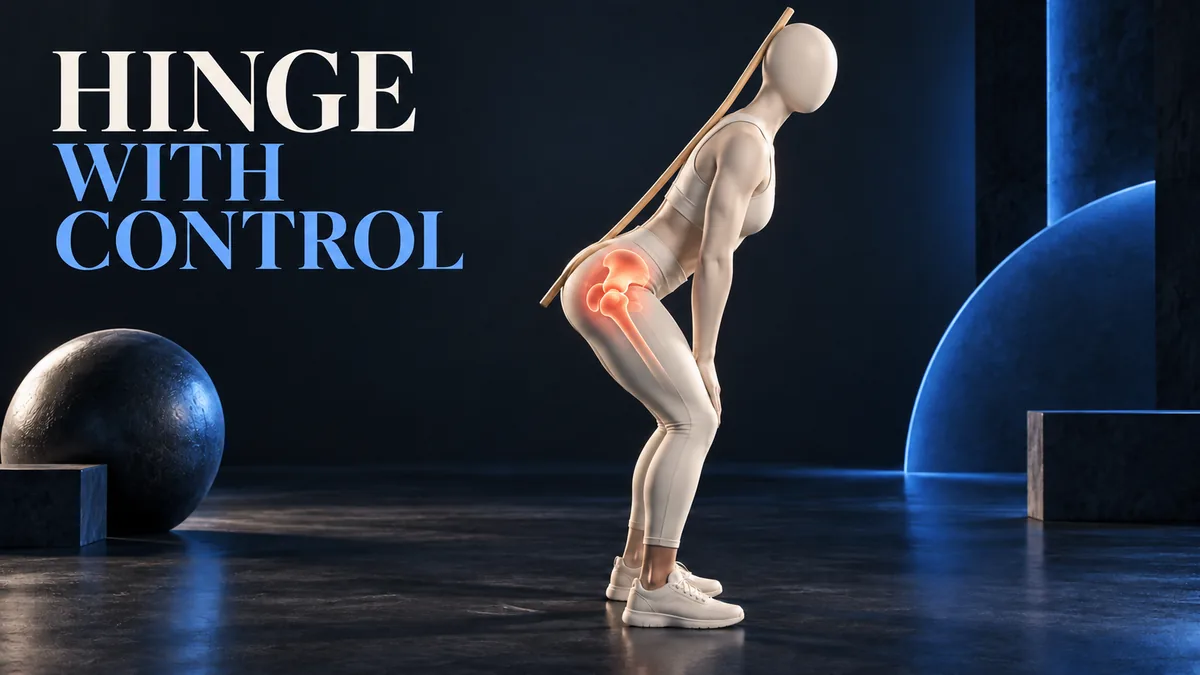
Hold the dowel behind you so it touches the back of your head, between the shoulder blades and the back of your pelvis. One hand can hold it near the neck and the other near the lower back. Keep the neck comfortable rather than pressing your head into the stick. The CrossFit movement explanation describes these same contact points.
Send the hips backward
Plant both feet at a comfortable width and soften the knees. Let the hips travel back as the torso tips forward from the hip joints. Keep the dowel lightly in contact at all three points and stop before you must round or arch to reach farther. A hinge uses more backward hip travel than the goblet squat guide describes.
Return and troubleshoot
Press through the planted feet and bring the hips forward to stand tall. Breathe normally and reset between attempts. If the pelvis leaves the dowel, make the range smaller. If the knees bend deeply while the hips scarcely travel back, you may be practising a squat instead. Do not force a perfect shape or add weight to solve lost contact.
Use the skill in a plan
Try a few slow unloaded attempts and stop for pain, dizziness or loss of control. A trainer can help with an unfamiliar pattern; personal injury restrictions need individual advice. The first gym workout guide shows where hip work fits beside a push and pull. Fitonomy gym workouts can help organize training, but the app does not assess this drill.