Start with individual instruction
Only use this stretch when your clinician or hand therapist has taught it as suitable for you. The RNOH hand therapy leaflet says to do only the advised exercises and respect arm immobilization. Injury, surgery, a splint or movement restrictions can change what is allowed. Ask before removing support or trying an unfamiliar position. This page explains movement, not treatment for stiffness.
Separate fingers from the wrist
Finger extension means straightening the fingers. It is different from bending the wrist back in the assisted wrist extension guide. Passive or assisted movement uses help from the other hand; active movement uses the moving hand itself. Permission for one task is not permission for another, and a larger angle is not the goal.
Use the support you were shown
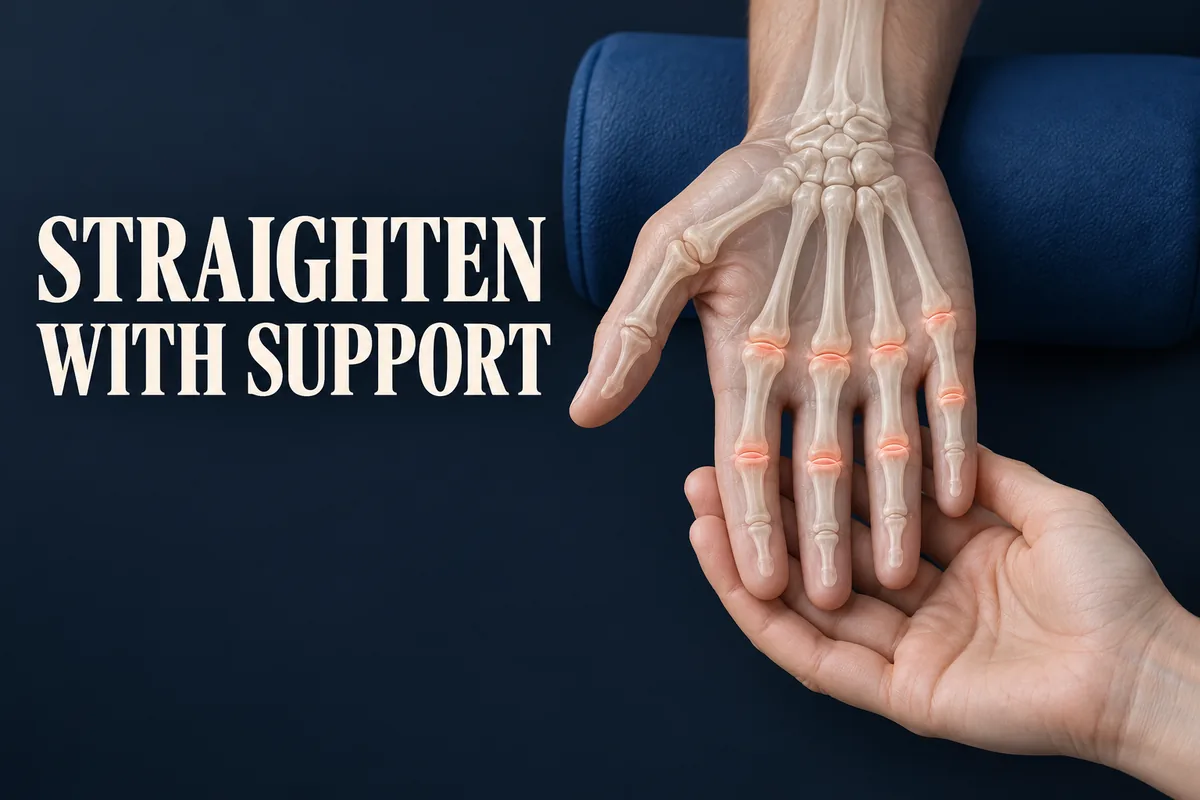
Support the arm comfortably as instructed. RNOH's exercise eight straightens the fingers with the other hand supporting them, without taking them beyond the line of the back of the hand. Follow your demonstration rather than pulling fingertips or pushing farther. The Dorset leaflet shows different individual finger setups. Do not combine those positions or choose a deeper one yourself. Your clinician decides range, hold, repetitions and frequency.
Keep active tasks distinct
In finger tendon glides, the fingers form shapes without the other hand forcing them. In individual finger lifts, a finger lifts from a table using its own movement. Do not add assisted pressure to either task. Release support gently as taught and keep the wrist position within your personal instructions.
Record context and respect symptoms
Note the side, taught support and comfort, without diagnosing an angle or claiming progress. Stop for pain, tingling, numbness, new swelling or loss of control and seek individual advice. Use the beginner mobility guide for broader context and explore Fitonomy Mobility separately. Article translations do not mean the app supports every article language or assesses this clinical stretch.
Straightening and curling are different directions. A separately taught assisted finger hook bends the two smaller joints while the base knuckle stays straight; permission for extension does not authorize it.