Choose stable support
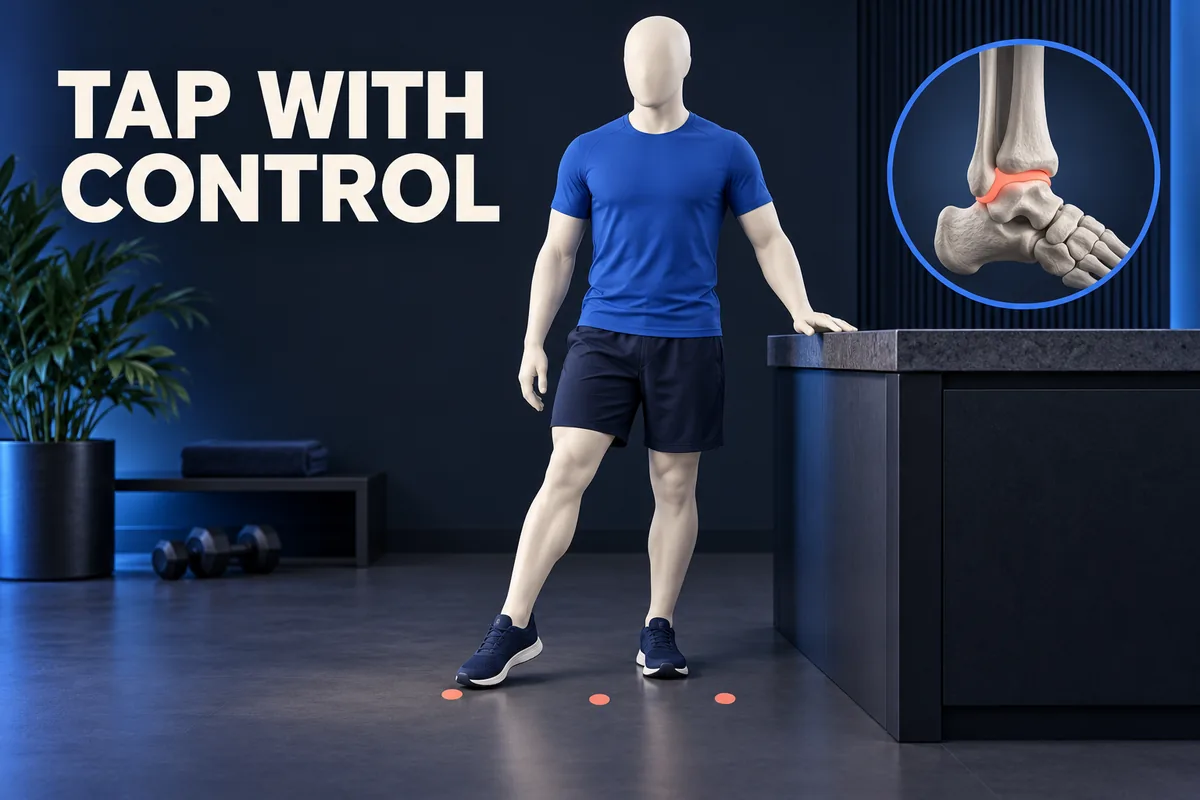
Stand beside a fixed counter with a clear level floor and secure footwear. Keep your eyes open and rest a hand on the counter. The Physitrack demonstration uses the leg nearest the support as the standing leg. This is general movement practice, not an injury treatment plan. If standing is uncertain even with support, choose another suitable position.
Start with one nearby tap
Let most of your weight settle over the standing foot. Move the other foot a short distance forward and touch the floor gently with its toes, then bring it back beside you. The Queensland guide describes light contact and a return. Start close enough that the standing foot stays planted and the body does not lurch forward. Use the hand support you need.
Add directions only while steady
After a comfortable forward tap, explore a small side tap and, if suitable, a small tap behind you. Return to the starting place between directions. Skip any direction that feels awkward or makes you twist or lean. You do not need floor markers, a large reach or a faster pace. This floor contact task differs from the knee lift in supported marching.
Reset before the next tap
Set both feet down whenever you need to regain a settled stance. Try the other side only when comfortable, arranging the support beside that standing leg. The supported single leg guide offers a simpler free foot hold; the weight shift guide keeps both feet down. No universal repetition count or unsupported progression is required here.
Record the setup and your limits
Note the support, directions attempted and whether the return felt controlled. Use Fitonomy Mobility for movement planning without treating observations as a diagnosis or a promised balance improvement. Article translations do not indicate app language availability. Stop for pain, dizziness or unsteadiness. For injury, recent surgery, a health condition or clinician restrictions, ask for individual guidance before trying this task.