Get permission first
Only practise this exercise if your clinician or hand therapist has approved it. The Plymouth thumb guide leaves suitable exercises and their start to your therapist. Injury, surgery or a splint may restrict movement. This explanation is not clearance, treatment or a rehabilitation schedule.
Support the hand and forearm
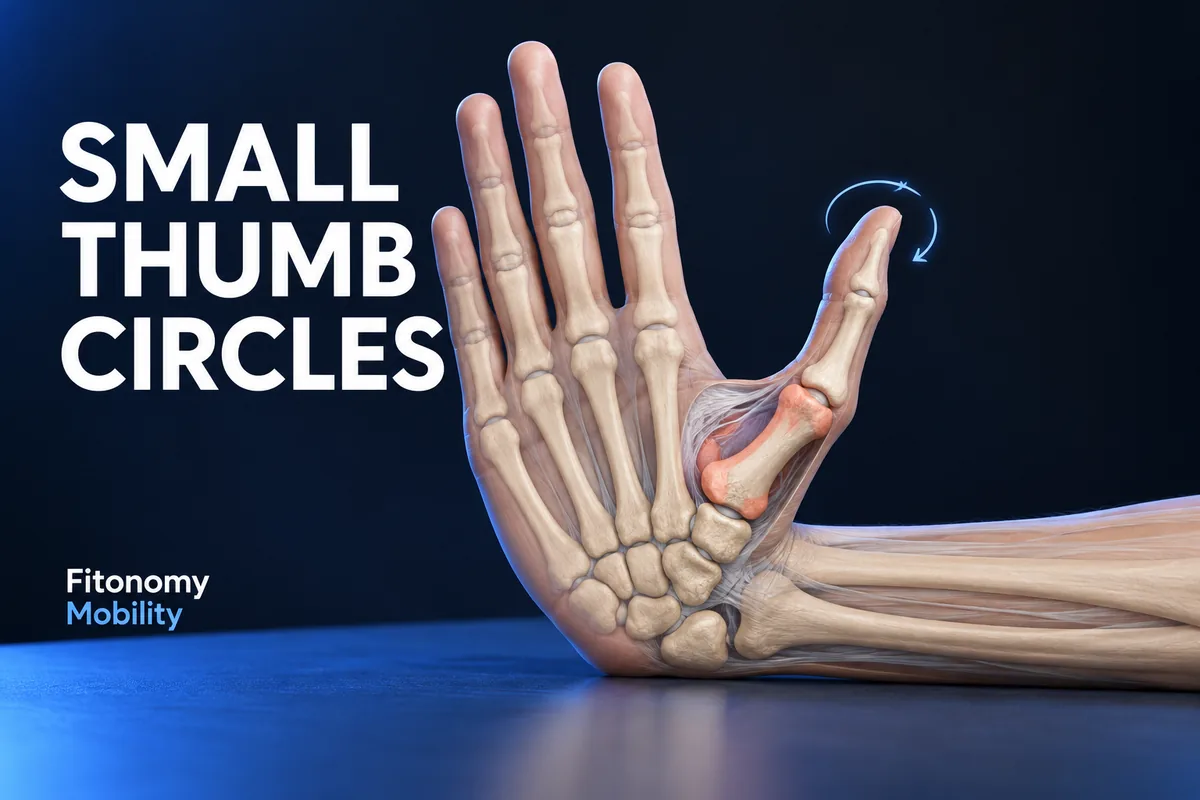
Sit beside a stable table. Rest your forearm and the little finger side of your hand comfortably, with the palm facing sideways. Keep the wrist aligned with the forearm and leave space around the thumb. The Bexley guide shows side support for thumb tasks. Do not press body weight through the hand.
Trace and reverse a small circle
Use the thumb itself to trace a small comfortable circular path. Pause, then explore the reverse direction if permitted and comfortable. Both source guides describe circular movement in both directions. Do not pull the thumb, add resistance or chase the largest circle. Your therapist determines any dose.
Keep the wrist quiet
Watch whether the wrist bends, forearm rolls or whole hand slides to make the circle. Reset the support and reduce the path if that happens. Stop for pain, locking, swelling, numbness or lost control and seek individual advice. A bigger circle is not proof of lasting progress.
Distinguish and record the task
Opposition meets fingertips, while palmar opening opens one direction. The flat thumb slide stays along the table. Note support, direction and comfort without treating the note as a diagnosis. Use the beginner guide for permitted choices or explore Fitonomy Mobility. Article languages do not imply matching app languages.