Get permission for this joint
Only try this task if your clinician or hand therapist approves it. Injury, surgery or a splint can restrict middle joint movement. The South Tees instructions show why one finger joint may need to remain straight while another moves. Follow your own plan, not an internet rehabilitation schedule.
Find the middle joint
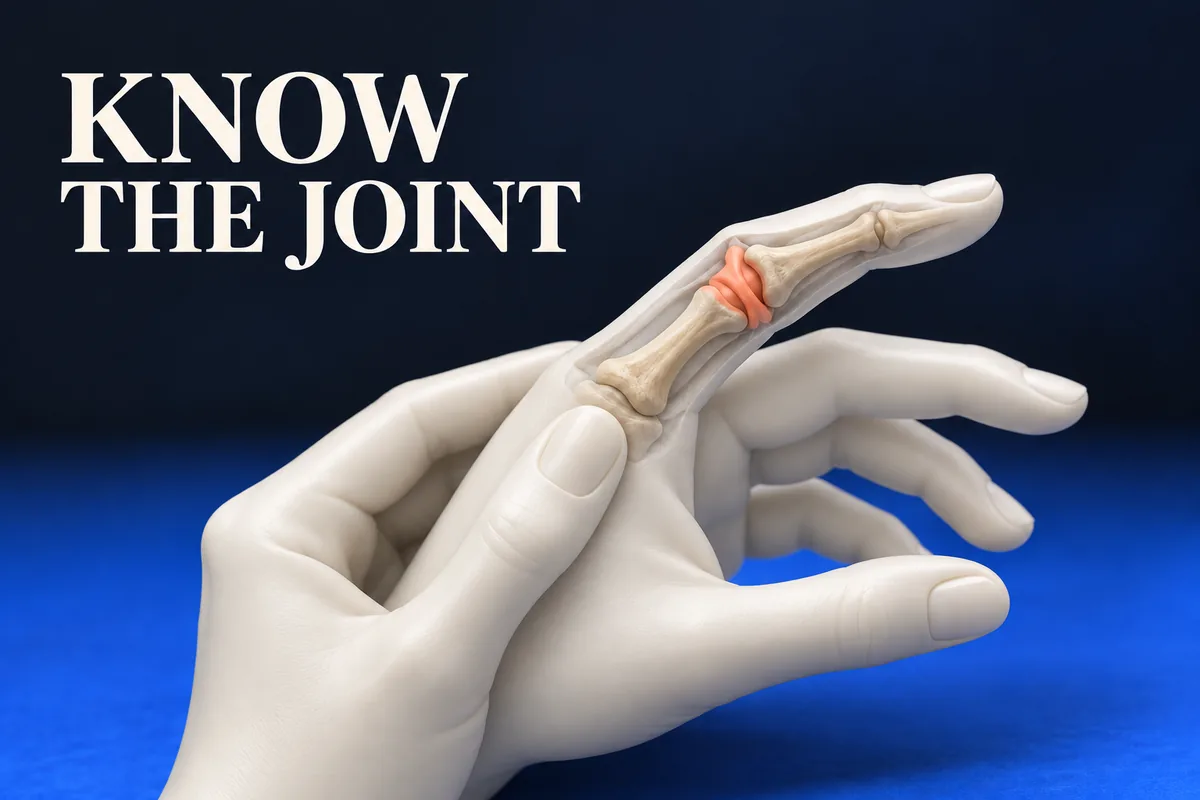
Choose a finger, not necessarily the middle finger. Its middle joint is called the proximal interphalangeal joint, or PIP. It sits between the large base knuckle and the joint nearest the nail. The Plymouth guide separates this task from a fingertip bend. Ask for a demonstration if the location is unclear.
Support below and move gently
Rest the forearm comfortably. Use the other hand to steady the finger segment toward the palm, just below the PIP where a ring would sit. Leave the segments beyond it free. The Dorset guide shows this support. Slowly bend at the middle joint using the finger itself, then return within your permitted movement.
Reset without pushing
The supporting hand steadies the base, not pushes the moving segment. Do not force the fingertip straight, add resistance or chase a deeper bend. The St Georges leaflet leaves dose to the therapist. Reset if the wrist or whole hand takes over. Stop for pain, catching, new swelling, numbness or loss of control and seek advice.
Keep hand tasks distinct
An isolated fingertip bend works a different joint. Tendon glides form whole hand shapes, and finger lifts raise a digit. Note the finger, support and comfort without diagnosing an angle or claiming improvement. Use the beginner guide for suitable choices. Translated articles do not mean Fitonomy Mobility supports every article language.