Get permission first
Only practise this task if your clinician or hand therapist approves it. Injury, surgery or a splint may restrict thumb movement. This explanation is not clearance or a rehabilitation plan.
Find the tip joint
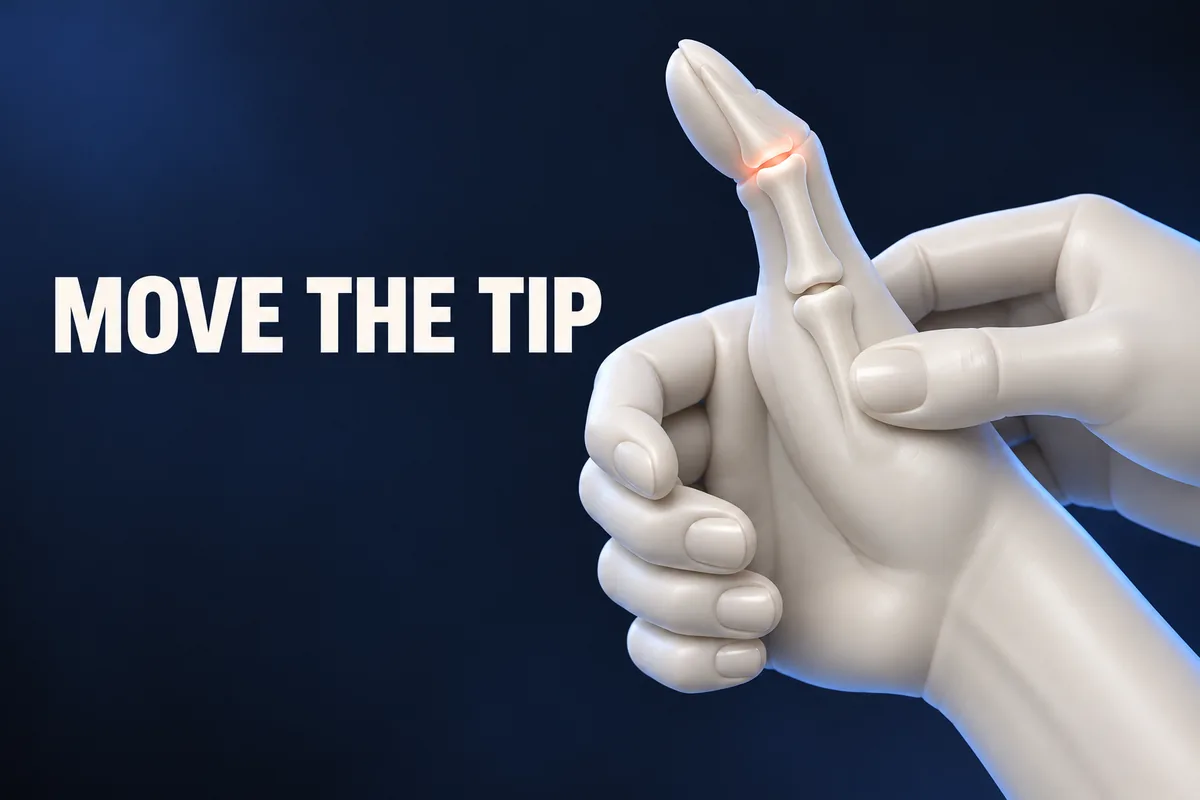
Rest your elbow on a table with the hand upright and wrist comfortable. The Cambridge guide identifies the thumb tip joint as IP, above the MCP knuckle. The thumb has two phalanges, unlike the fingers.
Support below and bend
Use the other hand to steady the thumb at its MCP knuckle, below the tip joint. Leave the tip free. Slowly bend and return the tip using the thumb itself, within permitted movement. Do not pull, press or pinch.
Reset without forcing
Do not force the tip straight or add resistance. Reset if the wrist or whole thumb takes over. The South Tees instructions leave exercise and dose to the therapist. Stop for pain, catching, swelling, numbness or lost control; seek advice.
Keep tasks distinct
Opposition meets fingertips, while the flat thumb slide moves along a table. Record support and comfort, not a diagnostic angle. Use the beginner guide for suitable choices. Articles in multiple languages do not imply every language is supported by Fitonomy Mobility.
The tip task supports near MCP. If your therapist has separately taught and cleared a middle thumb joint task, compare its support at the thumb base rather than moving the support by guesswork.