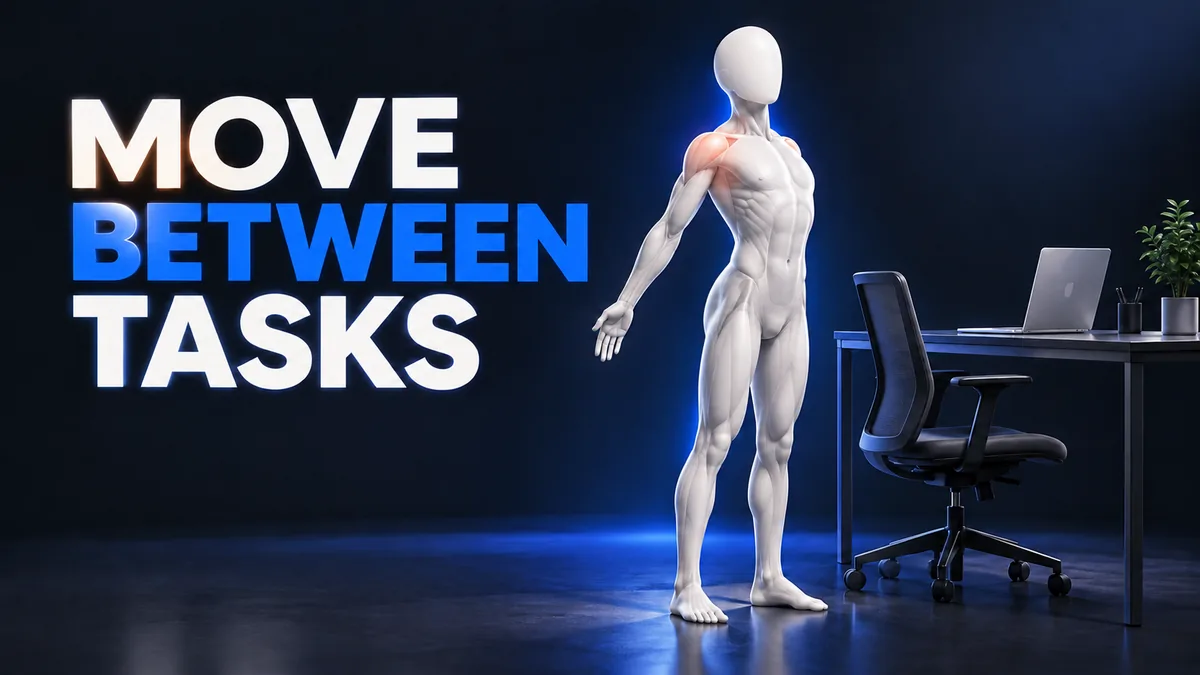
Choose a stable start
Stand beside a clear desk if it is comfortable and safe, or sit in a firm chair that does not roll. Leave room to move without striking furniture. NHS seated exercise guidance recommends a stable chair and comfortable movement. You can also walk away from the desk if that fits your space.
Move the shoulders gently
Let the arms hang and make a small relaxed shoulder circle, then reverse direction. Keep the neck easy and avoid forcing a large arc. If you prefer a detailed single movement, see our seated shoulder circles. The goal here is a change of position, not a test of range.
Turn the upper back within comfort
With feet grounded, fold the arms loosely across the chest and turn the upper body a little to one side, then back and to the other. Let the hips stay mostly forward. Mersey Care NHS desk guidance includes a chair twist as a desk option. Our seated upper back rotation explains that movement in more detail.
Visit the ankles and change position
If seated, lift one heel slightly and point and flex the foot in a comfortable small range, then switch. If standing, keep a support nearby and gently rise and lower through both feet instead. These are choices, not a fixed prescription. The seated ankle circles guide offers another steady option.
Return to the next task
Finish by noticing whether standing, a short walk, or sitting feels appropriate now. The desk sequence does not undo long sitting or treat pain. Stop for pain, dizziness or unusual symptoms and follow any individual restrictions. Use the beginner mobility guide to select another movement. The Fitonomy Mobility app is a separate movement product; this article's translation does not imply its interface is available in every article language.